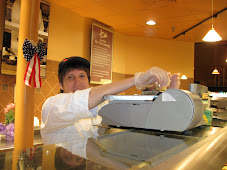
A stock-in-trade little conversation exchange at the gas station window is to ask people how they are or “are doing”. It was one of these little openers that stimulated the “Keeping It Human” article on my “Authentic Customer Service” web site. (www.home.earthlink.net/~authenticcustomerservice/)
But when I am not feeling very good myself, especially if I am depressed, I shy away from using this question, because people are more likely then to return the question – and I don’t know what to say. It feels lousy to lie: “I’m fine”, “I’m good”, etc – these just aren’t true, and dishonesty does not really follow the path of “Authentic Customer Service”. But not using this icebreaker I seem to lose too much, in terms of really making contact with my customers.
And it also doesn’t feel right to complain, partly because most customers aren’t really ready for this kind of honesty. Sometimes, though, if they themselves open with some form of “lousy” – or ask me first, then reply that way – then it sometimes feels right to join them. “Hey, that really the honest answer for me”, etc.
But complaining doesn’t work for me on another level. I really do believe (though obviously not completely) that all is well – that there is no chaos, that there is a purpose for everything. From this perspective, there is nothing wrong with anything I may be feeling – it is all in divine order.
I also believe this business of nothing being wrong in a very specific way about my down moods. They drive me to introverting and particularly to writing. I not only identify myself as a writer, but at this moment in time I believe that I am meant to be really moving ahead on two writing projects. But there is so much inertia (including depression) and resistance (“Who are you to think you have so much to say?”, etc.) around this writing that I kind of think I need to do whatever I can to push ahead.
A lot of me does believe that my muse is calling me and that it is worth it to be driven, to be out of balance for a while in order to move these projects ahead – especially to get my “Radical Integrity” book finished and at least self-published, preferably within the next few months. (It really is mostly finished and needs very little more writing – more just editing and organizing. “Just”!)
Driven and out of balance worked for me with my doctoral dissertation – I really became a kind of nutcase for several months, pretty much giving up on any wider life while I pushed for completion. I had so much resistance to working on that mega-project that I still believe that I would not have finished it in any other way. So one particular meaning of “I’m doing just right” is that the depression I’m feeling may be just right, if it drives me to my desk and to writing.
So I’m experimenting with answering the various forms of the “How are you?” question with “Just right”. I’m not remembering to do it all the time, but I really am liking it when I do use it. It is sufficiently vague to include all kinds of internal states. Some people immediately get that and are drawn to it – one friend (who struggles a lot with depression herself) asked my permission to start using it (which I immediately gave - as if I had some kind of copyright on it).
If people misunderstand this phrase to mean “perfect” – which to me could mean much the same thing as “Just right”, but to them may mean beyond wonderful – I sometimes just let it stand, and sometimes clarify with something like, “That can mean a lot of things”. I think that, over time, I’m likely to do less of this clarifying and more of just letting it stand.
Saturday, September 30, 2006


Friday, September 29, 2006
JENNIFER AND STEVEN
Two of my current heroes among our regular customers are Jennifer and Steven.
Jennifer is a pretty 40ish woman who walks with a terrible limp as she comes to the window for her cigarettes. (“I really want to quit, but I’m not ready yet.” She always asks me how I’m doing with my current quit – seven weeks now.) It looks like the whole right side of her body is very, very impaired. I don’t think I asked, but she volunteered one day that she was one of the last people to get polio. (“That sucks”, was the most creative thing I could think of to say.)
She has told me that she is officially disabled, that she goes to the Y for water aerobics (“the only way I can exercise”) and that she has lived in Florida and Alaska. (I haven’t asked her what took her to these places, but did say that she is quite the adventurer. I didn’t say, “given your condition”, but did think this.) The thing that stands out most about her is how cheerful she is – she really kind of sparkles. How has she arrived at a place of such apparent positive energy, dealing with all she has had to deal with? I really would like to know.
I find Jennifer very attractive – not “for a disabled person”, but period. The other day, she made reference to about a third old boyfriend. Me: “I’m starting to think you have left this trail of broken hearts across the country.” Jennifer: “Sort of…”
Steven is a handsome 25ish guy who drives a PT Cruiser. Most of the time, he has his beautiful golden retriever with him, wearing aviator goggles. This is way too cute. Perhaps the first time I talked to Steven, I asked him if the dog likes the goggles. “He loves them – they keep the dirt and bugs out of his eyes when he sticks his head out the window.” I waited on Steven a few times before I noticed the multi-colored, really kind of pretty cast on his right leg. Even then, he walked so normally that I would forget about the cast and be surprised again when I noticed it. I never got around to asking about it. A couple of months ago, the evening cashier Paul said that Steven had told him he was going to have the leg amputated. We speculated about maybe diabetes, but I thought that for that condition they start with a minimal amputation – a toe or foot or something. The only other thing Steven told Paul was that he was “ready to have the pain be over”.
I was the first one to see Steven after his amputation – I think about two weeks after. He was wearing shorts, with his artificial leg right out there to be seen. He said he was getting a lot of physical therapy to learn how to use it. The next time I saw him, maybe a week after, when asked how he was doing, he said that he was having a lot of pain. I could see that he was almost woozy with it. I asked if they were giving him “good drugs for it?” He said not good enough, that the pain was right up to the limit of what he could take.
I have been making a point of leaving the booth and going to get his money from him. He wants to pump the gas. I always ask – and am genuinely interested – in how he is doing. One day he had the foot of his prosthetic missing – he said it didn’t move enough and it was easier to use the accelerator with it off. Twice he has said that he is back to work and that this is good distraction. He is a social worker with kids with developmental disabilities. I think he appreciates my help, but even more my attention. I think he gets it that I like him – that I am approaching him with friendliness more than sympathy. We use each other’s names. I do both like him and admire him a lot.
Each of us who work at the gas station really do admire Steven and go out of our way to connect with him. A few weeks ago he said that he had really messed up his prosthesis by trying to lift one of his clients. His doctor mandated three weeks off of work. Before we knew it, he had flown to Albuquerque to be in a movie with Billy Bob Thornton, playing a Vietnam Vet. When he came back, he said it had been quite the experience. “We’ll see if any of that makes it into the final cut.”
I was thinking the other day that maybe Jennifer and Steven ought to meet each other. This may or may not make sense, but I do have them linked in my head. They are my two big heroes at the gas station.
Jennifer is a pretty 40ish woman who walks with a terrible limp as she comes to the window for her cigarettes. (“I really want to quit, but I’m not ready yet.” She always asks me how I’m doing with my current quit – seven weeks now.) It looks like the whole right side of her body is very, very impaired. I don’t think I asked, but she volunteered one day that she was one of the last people to get polio. (“That sucks”, was the most creative thing I could think of to say.)
She has told me that she is officially disabled, that she goes to the Y for water aerobics (“the only way I can exercise”) and that she has lived in Florida and Alaska. (I haven’t asked her what took her to these places, but did say that she is quite the adventurer. I didn’t say, “given your condition”, but did think this.) The thing that stands out most about her is how cheerful she is – she really kind of sparkles. How has she arrived at a place of such apparent positive energy, dealing with all she has had to deal with? I really would like to know.
I find Jennifer very attractive – not “for a disabled person”, but period. The other day, she made reference to about a third old boyfriend. Me: “I’m starting to think you have left this trail of broken hearts across the country.” Jennifer: “Sort of…”
Steven is a handsome 25ish guy who drives a PT Cruiser. Most of the time, he has his beautiful golden retriever with him, wearing aviator goggles. This is way too cute. Perhaps the first time I talked to Steven, I asked him if the dog likes the goggles. “He loves them – they keep the dirt and bugs out of his eyes when he sticks his head out the window.” I waited on Steven a few times before I noticed the multi-colored, really kind of pretty cast on his right leg. Even then, he walked so normally that I would forget about the cast and be surprised again when I noticed it. I never got around to asking about it. A couple of months ago, the evening cashier Paul said that Steven had told him he was going to have the leg amputated. We speculated about maybe diabetes, but I thought that for that condition they start with a minimal amputation – a toe or foot or something. The only other thing Steven told Paul was that he was “ready to have the pain be over”.
I was the first one to see Steven after his amputation – I think about two weeks after. He was wearing shorts, with his artificial leg right out there to be seen. He said he was getting a lot of physical therapy to learn how to use it. The next time I saw him, maybe a week after, when asked how he was doing, he said that he was having a lot of pain. I could see that he was almost woozy with it. I asked if they were giving him “good drugs for it?” He said not good enough, that the pain was right up to the limit of what he could take.
I have been making a point of leaving the booth and going to get his money from him. He wants to pump the gas. I always ask – and am genuinely interested – in how he is doing. One day he had the foot of his prosthetic missing – he said it didn’t move enough and it was easier to use the accelerator with it off. Twice he has said that he is back to work and that this is good distraction. He is a social worker with kids with developmental disabilities. I think he appreciates my help, but even more my attention. I think he gets it that I like him – that I am approaching him with friendliness more than sympathy. We use each other’s names. I do both like him and admire him a lot.
Each of us who work at the gas station really do admire Steven and go out of our way to connect with him. A few weeks ago he said that he had really messed up his prosthesis by trying to lift one of his clients. His doctor mandated three weeks off of work. Before we knew it, he had flown to Albuquerque to be in a movie with Billy Bob Thornton, playing a Vietnam Vet. When he came back, he said it had been quite the experience. “We’ll see if any of that makes it into the final cut.”
I was thinking the other day that maybe Jennifer and Steven ought to meet each other. This may or may not make sense, but I do have them linked in my head. They are my two big heroes at the gas station.
LOVE AND CONTRACTION AT THE GAS STATION
How do I express –or even feel – love, when I am so painfully contracted that it is difficult or impossible for me to extend? Keeping my blessing list helps. Saying nice things to people helps. Thanking people and wishing them a nice day helps. When people are expressing themselves, with all these funny little mannerisms, I can flow with them – act like they were clever or at least build off their lead. Like in improv, the “yes…and”, so they don’t look or feel awkward. Pay attention to them. If I can’t get all the way to seeing the divine being in them (I can try), then I can practice trying to like them.
I can tell that people feel safe with me, because they goof around progressively more with me – even in silly little ways.
I can tell that people feel safe with me, because they goof around progressively more with me – even in silly little ways.
SURVIVORS
All these people came to my window over three consecutive shifts. These were just the ones I recorded – there were others:
· This 75ish lady with the crook in her neck that had her looking at the ground – osteoporosis? How can she see the road to drive?
· A guy with a pretty hard crook in his back
· This guy with a real Parkinson’s shake – was he driving?
· This very old (80?), very wobbly woman, who said that she didn’t know how to pump the gas, then was very sweet about me helping her – and did seem to learn. Was she ok still driving? Her mental faculties seemed still ok – in a body that’s not very good at holding them any more. That must be awfully tough to handle – but she really came across as very sweet.
· This little 50ish polio (?) guy (leg braces, very impaired walk, sunglasses, buzz cut, hot little red Audi convertible) – so full of jokes, even if half of them make no sense to me. He seems like an indomitable spirit.
· This old farmer with barely any skin on his bones – cancer?
· This attractive, blonde, 45ish woman, walking with a limp. Is her right leg shorter than the left?
· This really cute 20ish girl with the cut scars on her arms
· This really pretty 25ish woman, fabulous eyes, only slightly heavy – and these really fucked-up flabby, wrinkled legs. What’s that about? And how does she handle it, including finding the courage to wear shorts?
· This guy with a cleft palate, camouflaged by his mustache.
· This 70ish guy with the cane and such blistered lips
· This 70ish guy with such a pronounced limp, then gets into a wheelchair
· How about this65ish lady with her leg braces, gratefully receiving help with pumping. I don’t know what her condition is, but she says she’s concerned that she is going to lose her arm strength, too.
· This young (25ish) guy, already burdened with being so rigid and cranky
· This 50ish guy with such a terribly stiff walk. I wondered what that was about, until I saw these awful burn scars on his arms and neck – they must extend over lots more of his body.
· This lady with such terrible eczema on her face
· This 70ish guy with the cleft palate – two in one day. He has had this all his life. I hope they are doing better work with these today.This 20ish guy with a stump of a hand
· This 75ish lady with the crook in her neck that had her looking at the ground – osteoporosis? How can she see the road to drive?
· A guy with a pretty hard crook in his back
· This guy with a real Parkinson’s shake – was he driving?
· This very old (80?), very wobbly woman, who said that she didn’t know how to pump the gas, then was very sweet about me helping her – and did seem to learn. Was she ok still driving? Her mental faculties seemed still ok – in a body that’s not very good at holding them any more. That must be awfully tough to handle – but she really came across as very sweet.
· This little 50ish polio (?) guy (leg braces, very impaired walk, sunglasses, buzz cut, hot little red Audi convertible) – so full of jokes, even if half of them make no sense to me. He seems like an indomitable spirit.
· This old farmer with barely any skin on his bones – cancer?
· This attractive, blonde, 45ish woman, walking with a limp. Is her right leg shorter than the left?
· This really cute 20ish girl with the cut scars on her arms
· This really pretty 25ish woman, fabulous eyes, only slightly heavy – and these really fucked-up flabby, wrinkled legs. What’s that about? And how does she handle it, including finding the courage to wear shorts?
· This guy with a cleft palate, camouflaged by his mustache.
· This 70ish guy with the cane and such blistered lips
· This 70ish guy with such a pronounced limp, then gets into a wheelchair
· How about this65ish lady with her leg braces, gratefully receiving help with pumping. I don’t know what her condition is, but she says she’s concerned that she is going to lose her arm strength, too.
· This young (25ish) guy, already burdened with being so rigid and cranky
· This 50ish guy with such a terribly stiff walk. I wondered what that was about, until I saw these awful burn scars on his arms and neck – they must extend over lots more of his body.
· This lady with such terrible eczema on her face
· This 70ish guy with the cleft palate – two in one day. He has had this all his life. I hope they are doing better work with these today.This 20ish guy with a stump of a hand
INFINITE BEINGS
What if I could see each person before me at the gas station window as a divine being? It feels to me now that this would be a process of waking up. It seems totally possible –to at least move in this direction, not necessarily to succeed all the time. It will require that I move beyond all my knee-jerk, instinctive responses to each person’s individual differences: smart/dumb, good-looking/plain, friendly/cool, cool/clunky, etc.
Moments later: this is so difficult! It feels impossible. I am so caught in appearances that I seem to immediately get lost, to go to sleep. A couple of tips for me, though: giving them a big, generous smile seems to loosen the judgmental mechanism in me. Likewise being really friendly towards them. If they present open and warm – or if I can help them get there – it is easier to set in motion the chemistry that builds on itself and allows a little bit of infinity to flow in. I get tripped up by the limitations in how people hold themselves, their defenses, etc.
This exercise could be more than enough to keep me busy in this job for a long time. I bet it also can cut the legs out from under any hurry to get out of this job. What goes on in each transaction that trips me up? How can I get around it, meet it, etc.? I bet a lot of what gets in the way is how I hold myself. We all carry so many layers and layers of conditioning and self-protection that mask our spiritual essence. Maybe, by breathing, slowing down, not being in a hurry, feeling honored to have another divine being in front of me….
This is obviously going to take a lot of progress. I want to remember to practice and to pay attention to what in them, in me, in the interaction keeps me from doing this. It’s definitely easier with kids. Then, after kids, young women? Or older people? I think they really come next. Or people who make good contact with me – who arrive at the window open. It really helps when I manage to charm them, when I see any change in their stance from stiff (dead) to animated (alive – what is the meaning of that word?)
Last night a 30ish hippy guy just absolutely stopped in his tracks when he realized I was genuinely showing up for him. He obviously had not expected this. Did this make it easier for me to see the divine being in him? Not consciously at the time, but maybe a little movement in that direction.
How do I do this with people who just drop their money and go – no engagement, no eye contact? Maybe that might almost be easier, without all the limitations and defenses in front of you.
Anything that treats people inclusively helps. Teasing, joking, playing seem to work wonders – really open up a space for a taste of infinity to slip in. Why is that? It requires a little drop in my defenses and theirs, a little bit (or more) of collaboration, for us to play together. A successful tease or joke requires that we work together, especially if we really banter together – at least one round of back and forth. It is, energetically, like a good tennis rally.
· This short, big-necked guy – always friendly – gave me two distinct winks today. So cute, he must be feeling really comfy with me, dropping his guard – it’s a kind of playing.
· Just putting a little lilt in my voice causes things to happen.
· This lady laughing over not remembering the name of her car style – very cute.
· This other lady broke into the sweetest, warmest, delicious smile, over my smile – it had to be because of that.
- And then this 70ish guy. His face is programmed, I think, to just not open as wide. But he got a gleam in his eye and, I think, a little extra playfulness in the tip of his hand to his head – a little salute.
Moments later: this is so difficult! It feels impossible. I am so caught in appearances that I seem to immediately get lost, to go to sleep. A couple of tips for me, though: giving them a big, generous smile seems to loosen the judgmental mechanism in me. Likewise being really friendly towards them. If they present open and warm – or if I can help them get there – it is easier to set in motion the chemistry that builds on itself and allows a little bit of infinity to flow in. I get tripped up by the limitations in how people hold themselves, their defenses, etc.
This exercise could be more than enough to keep me busy in this job for a long time. I bet it also can cut the legs out from under any hurry to get out of this job. What goes on in each transaction that trips me up? How can I get around it, meet it, etc.? I bet a lot of what gets in the way is how I hold myself. We all carry so many layers and layers of conditioning and self-protection that mask our spiritual essence. Maybe, by breathing, slowing down, not being in a hurry, feeling honored to have another divine being in front of me….
This is obviously going to take a lot of progress. I want to remember to practice and to pay attention to what in them, in me, in the interaction keeps me from doing this. It’s definitely easier with kids. Then, after kids, young women? Or older people? I think they really come next. Or people who make good contact with me – who arrive at the window open. It really helps when I manage to charm them, when I see any change in their stance from stiff (dead) to animated (alive – what is the meaning of that word?)
Last night a 30ish hippy guy just absolutely stopped in his tracks when he realized I was genuinely showing up for him. He obviously had not expected this. Did this make it easier for me to see the divine being in him? Not consciously at the time, but maybe a little movement in that direction.
How do I do this with people who just drop their money and go – no engagement, no eye contact? Maybe that might almost be easier, without all the limitations and defenses in front of you.
Anything that treats people inclusively helps. Teasing, joking, playing seem to work wonders – really open up a space for a taste of infinity to slip in. Why is that? It requires a little drop in my defenses and theirs, a little bit (or more) of collaboration, for us to play together. A successful tease or joke requires that we work together, especially if we really banter together – at least one round of back and forth. It is, energetically, like a good tennis rally.
· This short, big-necked guy – always friendly – gave me two distinct winks today. So cute, he must be feeling really comfy with me, dropping his guard – it’s a kind of playing.
· Just putting a little lilt in my voice causes things to happen.
· This lady laughing over not remembering the name of her car style – very cute.
· This other lady broke into the sweetest, warmest, delicious smile, over my smile – it had to be because of that.
- And then this 70ish guy. His face is programmed, I think, to just not open as wide. But he got a gleam in his eye and, I think, a little extra playfulness in the tip of his hand to his head – a little salute.
Wednesday, September 27, 2006
IT’S SO EASY
This morning, in the window at the gas station, waiting on this black working class guy about my own age, I swear I did nothing special beyond just putting a little extra inflection in my voice as I parroted back his pump number and the amount of money he had paid. But this guy’s expression got really bright as he looked me straight in the eye and said, with lots of emphasis, “You’re so nice!” I gave him a really genuine “Thank you”, partly because I was genuinely floored by the compliment.
Just a little extra lilt in my voice – that’s all it took. This was a new guy, but I know I have a fan club around there – many of them have told me how much they appreciate the attention I give them. Some of these, again, have floored me, because I don’t remember being especially nice to them – in some cases, I just plain don’t remember them!
It’s so easy, so easy to make people feel special. I think it also is an unfortunate reflection of how little people expect from customer service folks – it like shocks them when someone is genuinely nice to them.
Here’s where it becomes more complicated. I embrace this work because I’m writing, thinking, conversing – I’m just all over “front line customer service”. It’s all grist for the mill for me. I have lots of threads that make this job worthwhile to me, even at shit pay and in a system where managers don’t know how to manage – and especially don’t know how to give “attaboys” for good work.
So, most front line customer service folks are not writing stuff about the work. Most of them are in it because it was the job that they got. Most of them (except maybe in this town) don’t think of themselves as living the life of the Asheville artist, with mindless day jobs that support – or at least don’t suck too much energy away from – their art. Most of them don’t have an artistic form of expression to nurture their soul. (Again, Asheville is the exception that proves the rule.) And then they work in these systems where they chronically do not feel respected or appreciated for their contributions – including being paid a disrespectfully low wage.
So, here’s the paradox: easy to give customers that extra little juice that makes their day, but hard to motivate customer service folks to do this. Hard to help them find their way into “Authentic Customer Service (ACS)”, that path that celebrates the server as much as the customer.
But not really all that hard if you know how. I’m convinced that, in many workplaces, just having people take five minutes after each shift to fill out my “Post-Shift Debrief” (www.home.earthlink.net/~authenticcustomerservice/id23.html), could in itself leverage a shift in this area. I also think it wouldn’t be all that hard to teach supervisors to move in this ACS direction – though you probably would have to get through their resistance that comes from them also being managed so poorly. It would be really good to be able to get my hands on their bosses, too.
Just a little extra lilt in my voice – that’s all it took. This was a new guy, but I know I have a fan club around there – many of them have told me how much they appreciate the attention I give them. Some of these, again, have floored me, because I don’t remember being especially nice to them – in some cases, I just plain don’t remember them!
It’s so easy, so easy to make people feel special. I think it also is an unfortunate reflection of how little people expect from customer service folks – it like shocks them when someone is genuinely nice to them.
Here’s where it becomes more complicated. I embrace this work because I’m writing, thinking, conversing – I’m just all over “front line customer service”. It’s all grist for the mill for me. I have lots of threads that make this job worthwhile to me, even at shit pay and in a system where managers don’t know how to manage – and especially don’t know how to give “attaboys” for good work.
So, most front line customer service folks are not writing stuff about the work. Most of them are in it because it was the job that they got. Most of them (except maybe in this town) don’t think of themselves as living the life of the Asheville artist, with mindless day jobs that support – or at least don’t suck too much energy away from – their art. Most of them don’t have an artistic form of expression to nurture their soul. (Again, Asheville is the exception that proves the rule.) And then they work in these systems where they chronically do not feel respected or appreciated for their contributions – including being paid a disrespectfully low wage.
So, here’s the paradox: easy to give customers that extra little juice that makes their day, but hard to motivate customer service folks to do this. Hard to help them find their way into “Authentic Customer Service (ACS)”, that path that celebrates the server as much as the customer.
But not really all that hard if you know how. I’m convinced that, in many workplaces, just having people take five minutes after each shift to fill out my “Post-Shift Debrief” (www.home.earthlink.net/~authenticcustomerservice/id23.html), could in itself leverage a shift in this area. I also think it wouldn’t be all that hard to teach supervisors to move in this ACS direction – though you probably would have to get through their resistance that comes from them also being managed so poorly. It would be really good to be able to get my hands on their bosses, too.
Subscribe to:
Posts (Atom)